A 7-Tool Playbook for Selling on Amazon in 2026


Your Amazon Playbook Is Obsolete. Here's the 2026 Update.
Most advice about selling on Amazon still treats discoverability like a keyword placement exercise. That's outdated. Amazon has moved toward AI-assisted shopping, and Alexa for Shopping is now built into the main search bar of the Amazon Shopping app, which changes how shoppers search and how listings get understood. Across marketplaces like Amazon and Walmart, teams are also seeing the same broader shift: product content has to answer intent, not just match terms.
That means better structured bullets, clearer benefits, stronger review coverage, and content that can survive side-by-side comparison engines. If your team also works in visual categories, it helps to leverage AI tools for fashion visuals alongside listing work.
1. Cosmy
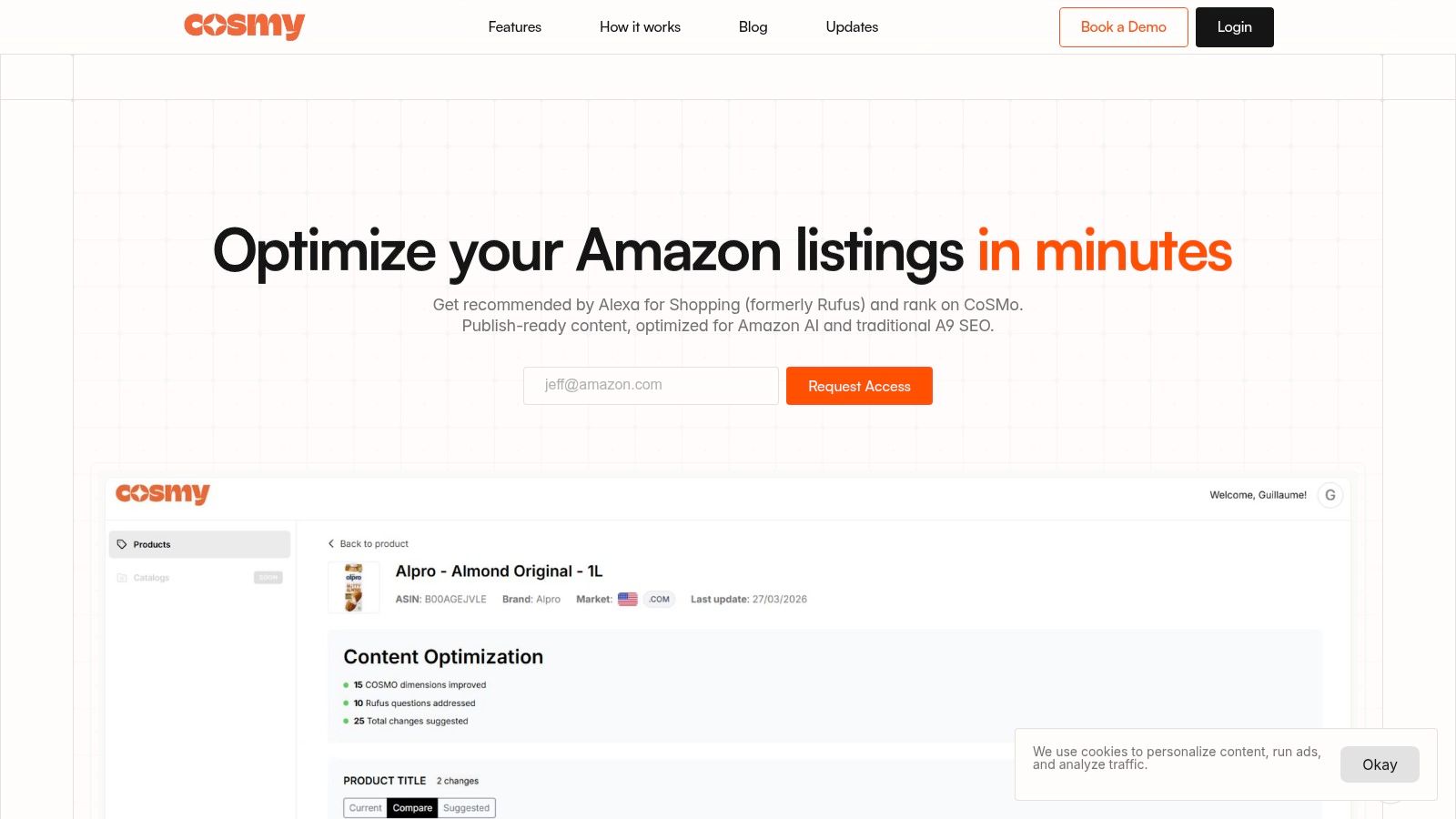
Cosmy is the clearest example of where selling on Amazon is headed. Instead of treating listing optimization as a one-time keyword pass, it audits content against Alexa for Shopping and CoSMo, then generates publish-ready copy built for how AI-driven search interprets product detail pages. That matters because shoppers increasingly use natural language, and Amazon's assistant is designed to answer conversational prompts.
The workflow is simple. You drop in an ASIN or Amazon URL, and the platform pulls in listing content, reviews, Q&A signals, and competitor context to identify gaps. For teams managing large catalogs, that's much closer to how real work happens than passing spreadsheets between copywriters, PPC managers, and account leads.
Why it stands out
The main advantage is speed without losing Amazon-specific depth. Cosmy doesn't just suggest edits. It produces a title, five bullets, and a description you can review and publish. The output is meant for actual catalog operations, not for a slide deck.
Practical rule: AI-generated copy is only useful if your team can paste it live after a fast brand check. Otherwise it's just another draft.
There's also a strategic fit here that many older tools miss. Traditional keyword tools help with term discovery, but they don't explain whether your bullets answer shopper questions, whether your reviews support product claims, or whether your content is framed in a way an AI assistant can compare confidently. Cosmy is built around that shift.
A useful starting point is Cosmy's perspective on Amazon content strategy, especially if your current process still separates SEO copy from conversion copy. On Amazon, those two jobs are now tied together.
Trade-offs
Best for: Catalog teams and agencies that need repeatable listing improvements across many ASINs.
Watch for: No public pricing. You have to book a demo, which slows down evaluation for smaller teams.
Reality check: Human review still matters. Brand voice, compliance, and category nuance still need an operator.
If your biggest problem is stale listings that were written for exact-match search, Cosmy is the strongest fit in this list.
2. Amazon Seller Central
Seller Central is the operating system. Every serious Amazon tool depends on it, but none of them replace it. Listings, inventory, pricing, promotions, A+ Content, Brand Registry tasks, FBA, and Amazon Ads all get executed here, which means discoverability strategy becomes live catalog reality.
That point matters more now because Amazon search is no longer just a keyword retrieval problem. Seller Central holds the content, attributes, variation structure, fulfillment settings, and retail signals that shape how Amazon systems, and increasingly AI shopping assistants, interpret your offer. If a model like CoSMo or Alexa is trying to decide whether your product is a confident recommendation, weak bullets and incomplete attributes in Seller Central create the problem upstream.
What it does best
Seller Central gives direct control over the details that affect ranking, conversion, and operational health at the same time. A title update goes live here. A suppressed listing gets fixed here. An inventory error, stranded unit issue, or pricing conflict usually shows up here before your reporting stack explains the damage.
That makes it the right place to tighten the basics first. Good discoverability starts with clean catalog inputs, not with more keyword stuffing. Brands that need a better framework for writing listings around entity clarity, shopper intent, and AI-readable product content should review this Amazon content strategy framework for AI search.
Operations matter just as much. If FBA prep is inconsistent, inbound delays and receiving errors can erase the gains from better content and stronger ads. Teams that outsource that part of the workflow can use this complete guide to Amazon prep to evaluate what should stay in-house and what should move to a prep partner.
A practical reference is this guide to Black Friday and Cyber Monday planning, especially for sellers increasing ad spend during peak periods. Media can drive traffic fast. It cannot fix broken replenishment, poor listing structure, or suppressed ASINs.
Seller Central is where catalog quality, margin control, and fulfillment discipline meet. Every shortcut shows up here sooner or later.
Trade-offs
Best for: Every seller on Amazon. It is the required control center.
Watch for: Reporting and workflow depth are limited compared with specialist tools for research, content analysis, or bid automation.
Reality check: Small mistakes get expensive fast. Referral fees, storage fees, fulfillment costs, and stockout risk all sit in the same system, so teams need tight operating habits.
3. Helium 10
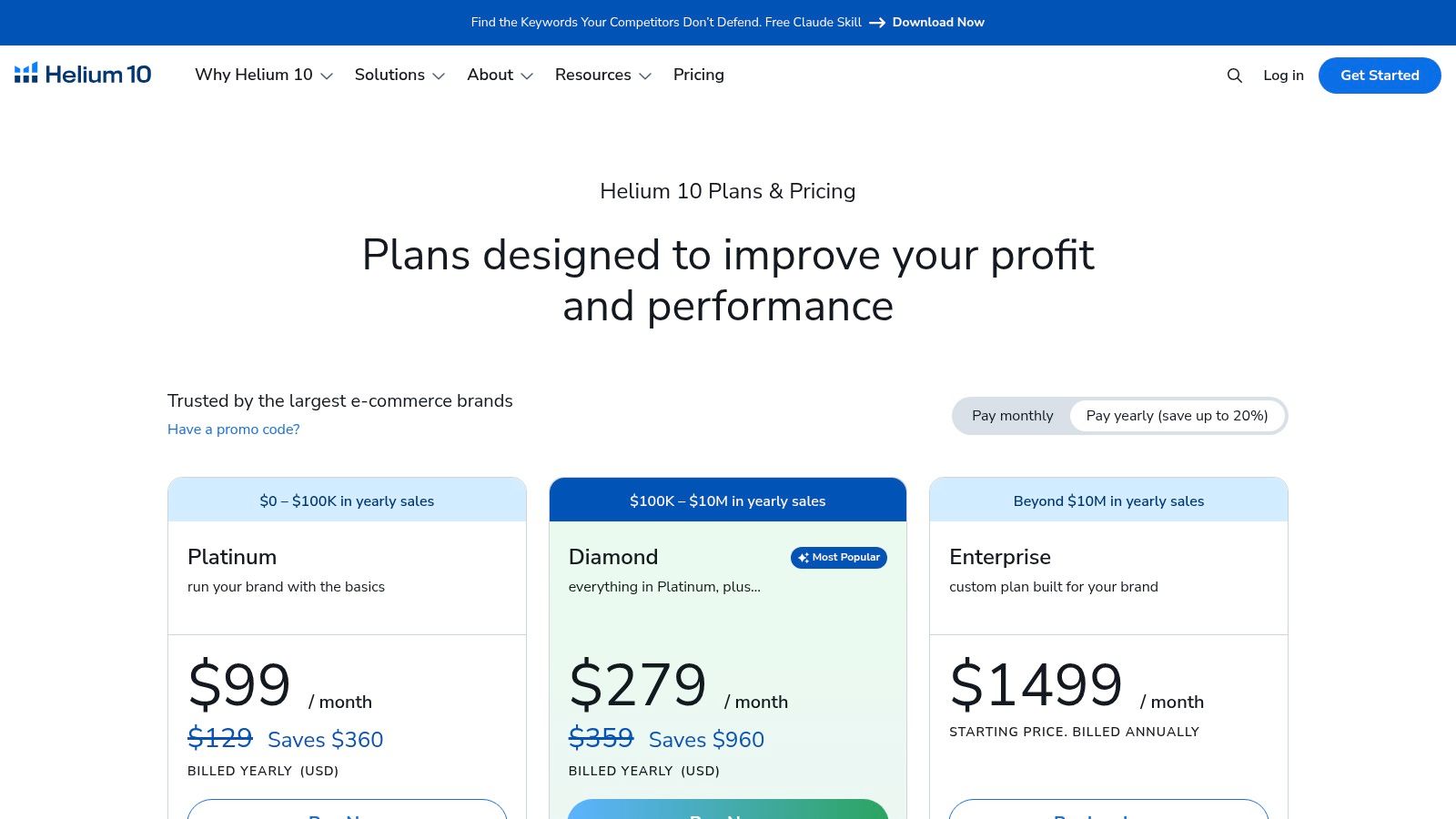
Helium 10 is useful, but many sellers ask it to do a job it was never built to do. It gives strong research workflow coverage across product discovery, keyword analysis, listing support, and lighter ad tasks. That breadth is why in-house teams keep it in the stack, especially if they also sell on Walmart.
The standard sequence is straightforward. Black Box or Xray for product and niche research. Cerebro and Magnet for search-term mining. Listing Builder or Listing Analyzer for cleaning up titles, bullets, and backend fields. That process still helps.
The trade-off shows up after the keyword list is done. Search visibility on Amazon no longer depends only on whether a phrase made it into the copy. AI-driven discovery systems also weigh entity clarity, use case fit, and whether the listing explains the product in a way machine models can interpret with confidence. Helium 10 helps you find the language shoppers use. It does less to tell you how systems like CoSMo or Alexa are likely to interpret the full page.
That matters for teams that have already hit the ceiling on old SEO habits. A listing can be keyword-rich and still underperform because the bullets are vague, the title is stuffed, or the product story is fragmented across images, A+ content, and hidden attributes. For that gap, pair Helium 10's research layer with an Amazon content strategy framework built for AI search.
Where it fits now
I'd use Helium 10 early in the workflow, before copy is finalized and before ad spend ramps. It is good for pressure-testing demand, spotting term patterns, and finding obvious listing gaps against competing ASINs.
It is less convincing as the only source of truth once the goal shifts from keyword coverage to recommendation readiness. Teams that win now usually treat Helium 10 as an input engine, then handle content architecture, retail readiness, and conversion work with a different standard.
Best for: Teams that want one platform for research, keyword work, listing support, and basic operational coverage.
Watch for: Higher-tier plans are where the stronger analytics and ad features start to matter.
Reality check: Good keyword data helps. It does not replace clear product positioning or AI-readable listing structure.
4. Jungle Scout
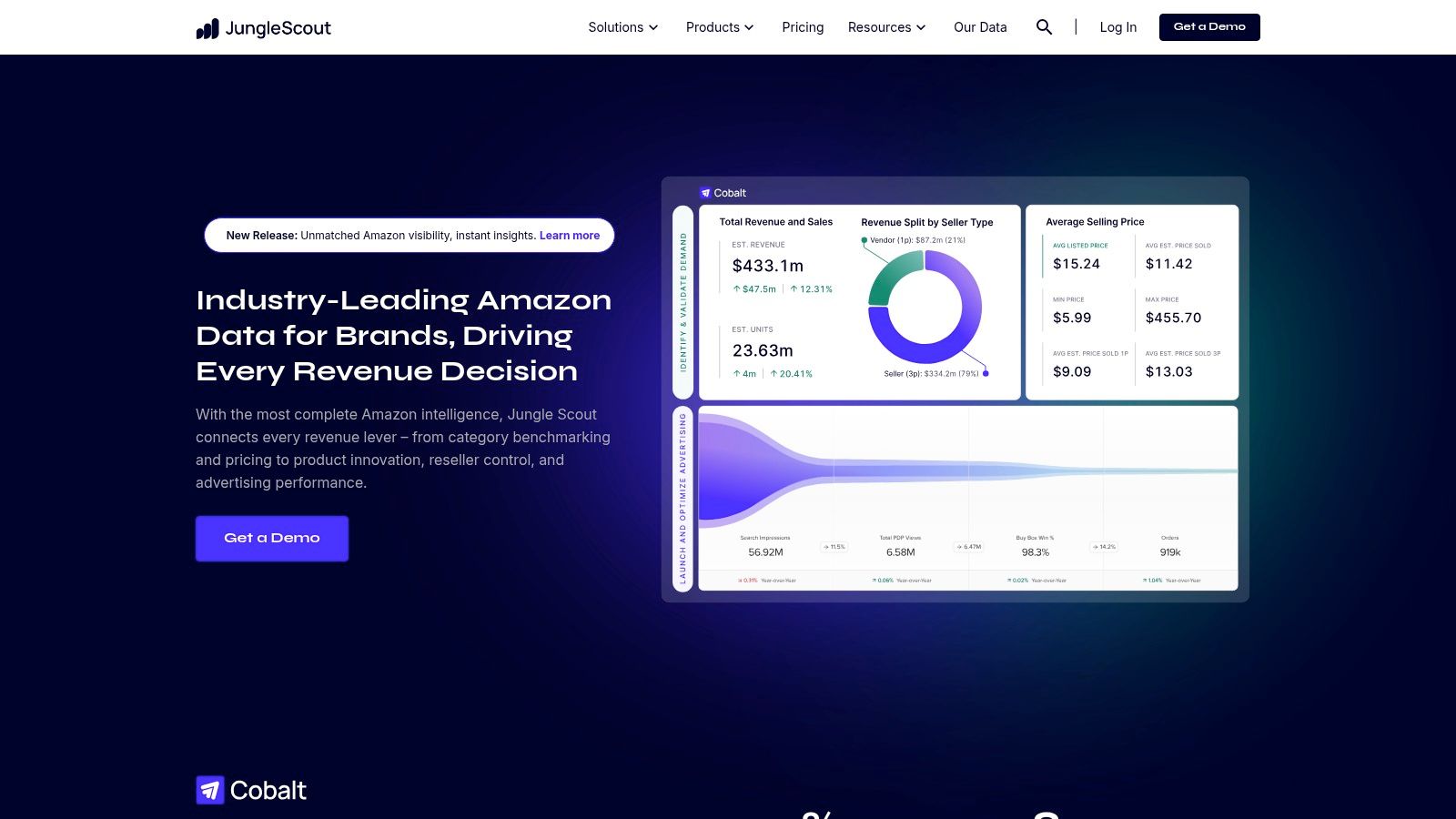
Jungle Scout earns its place earlier than many teams expect. Before rewriting titles or testing ad bids, it helps answer the harder question: is this category worth chasing at all?
That is why I usually put Jungle Scout in front of operators who need market intelligence across a niche, not just SKU-level listing help. Catalyst fits smaller sellers that need product and category research without enterprise overhead. Cobalt makes more sense for larger brands tracking share, trend shifts, and competitive movement across multiple ASINs.
Amazon rewards clear positioning, and AI-driven discovery raises the bar. Systems like CoSMo and Alexa do not only scan for isolated keywords. They infer product fit from the full listing context, including attributes, reviews, images, and the consistency of the product story. Jungle Scout helps at the input stage by showing where demand exists, which competitors own the conversation, and what shopper expectations already define the category.
Best use case
Use Jungle Scout when the decision sits upstream of copywriting. It is strong for product selection, line expansion, and category benchmarking. If a brand is choosing between two adjacent niches, deciding whether a subcategory is saturated, or checking whether incumbents are winning on price, rating depth, or assortment breadth, Jungle Scout gives a clearer operating view than a listing tool built mainly for keyword output.
I would still keep the trade-off in view. Jungle Scout can help you spot opportunity and pressure-test a market, but it will not tell you whether your PDP is structured in a way AI systems can interpret with confidence. Research tells you what space to enter. Discoverability depends on whether your content answers the right shopper questions in a format machines and humans can both parse cleanly.
The teams that get the most value from Jungle Scout use it as a category-mapping tool first. Then they turn those findings into sharper positioning, stronger content architecture, and a cleaner path to conversion.
5. Teikametrics

Teikametrics starts to make sense once ad management stops being a spreadsheet problem and becomes a margin problem. The platform is built for brands that need tighter control over bids, budgets, and profitability across a growing catalog, with room to expand into DSP and AMC as the account gets more complex.
That distinction matters. Paid visibility on Amazon is now part of the operating model for many categories, especially when a new ASIN has limited sales history and weak organic placement. Teikametrics helps teams automate the mechanics, but the core benefit is decision-making tied to profit instead of top-line ad metrics alone.
I would not treat it as a fix for weak retail fundamentals. If the listing has unclear positioning, unstable pricing, poor reviews, or thin creative, the software can improve campaign efficiency while the PDP still underperforms. In an AI search environment, that gap gets expensive. Systems that interpret product fit from listing context, shopper feedback, and conversion signals need a page that is easy to parse before ad spend can compound effectively.
What works and what to watch
Teikametrics is strongest for brands that already have a reasonably healthy catalog and enough spend volume for automation to produce meaningful gains. It is less compelling for sellers still testing product-market fit or cleaning up basic account structure.
Best for: Brands with meaningful ad budgets that need bid and budget automation across Amazon and Walmart
Watch for: Spend-based pricing at higher service levels
Reality check: Ad automation improves media execution. It does not solve weak content or low conversion
The practical trade-off is simple. Teikametrics can save time and reduce wasted spend, but only if the inputs are solid. Teams that get the most from it usually pair ad automation with stronger listing architecture, cleaner product data, and a clearer content strategy built for both shoppers and AI-driven discovery.
6. Perpetua
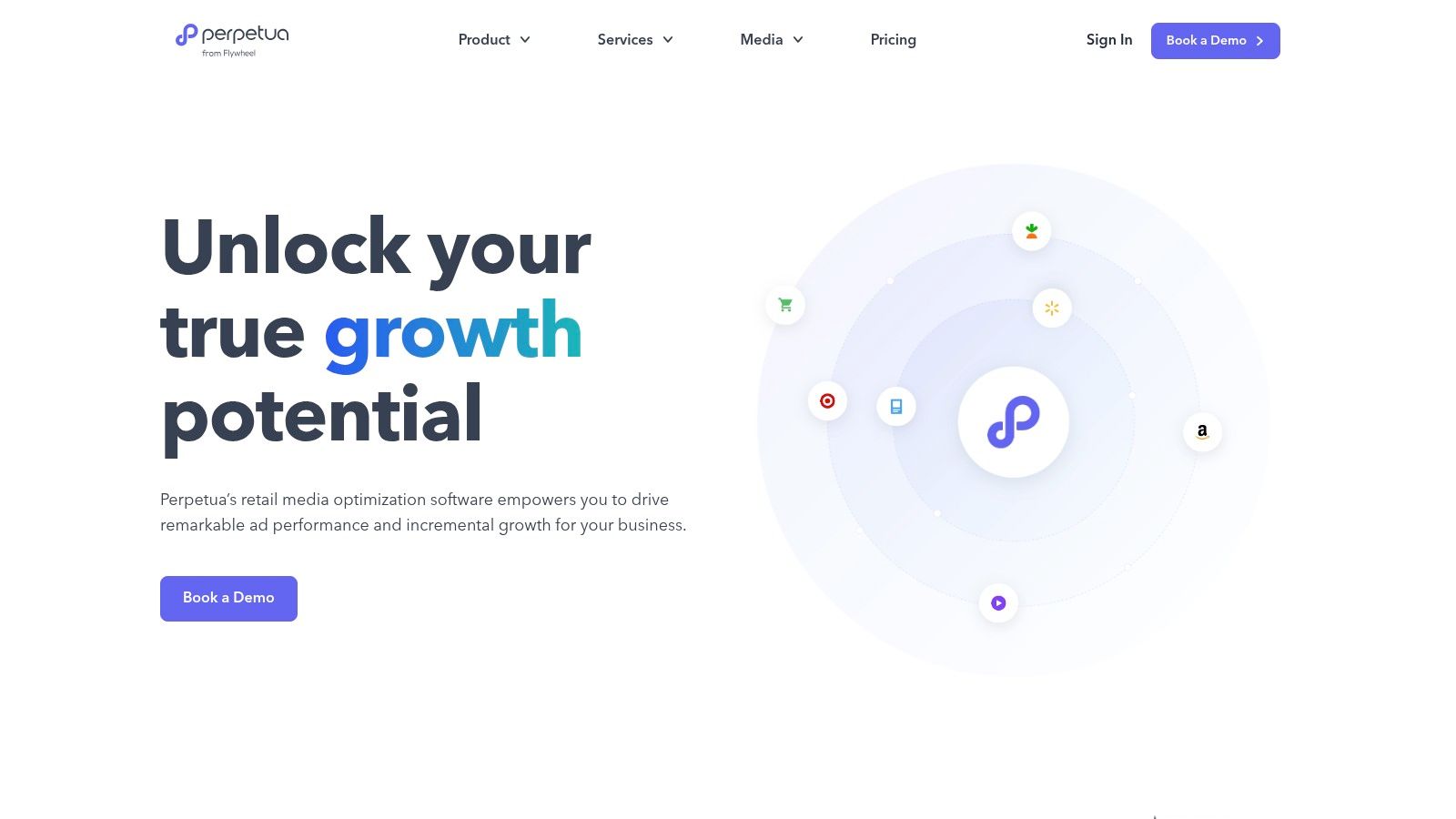
Perpetua is a good fit for brands and agencies that want a unified ad cockpit across marketplaces. It focuses on goal-based optimization, budget pacing, dayparting, and reporting. If your team manages a lot of campaigns across Amazon and other retail media networks, that centralization is useful.
I like Perpetua more for execution-heavy teams than for early-stage sellers. It gives managers a structured way to control spend and scale routine actions without living inside every campaign. The trade-off is that its framework works best when your team is comfortable operating around platform-defined goals instead of custom workflows for every account.
Where it earns its keep
Perpetua becomes more valuable as media complexity grows across retailers. Amazon isn't the only marketplace changing. Walmart and other retail platforms are also moving toward more AI-assisted search and recommendation experiences, so cross-marketplace reporting and campaign governance matter more than they used to.
If your team spends half the week exporting reports and reconciling marketplace ad data, Perpetua solves a real operations problem.
It's less compelling if your ad spend is still modest or your catalog is small. In that case, the platform fee can feel heavy compared with what you'd get from native tools plus a tighter manual process.
7. Pacvue
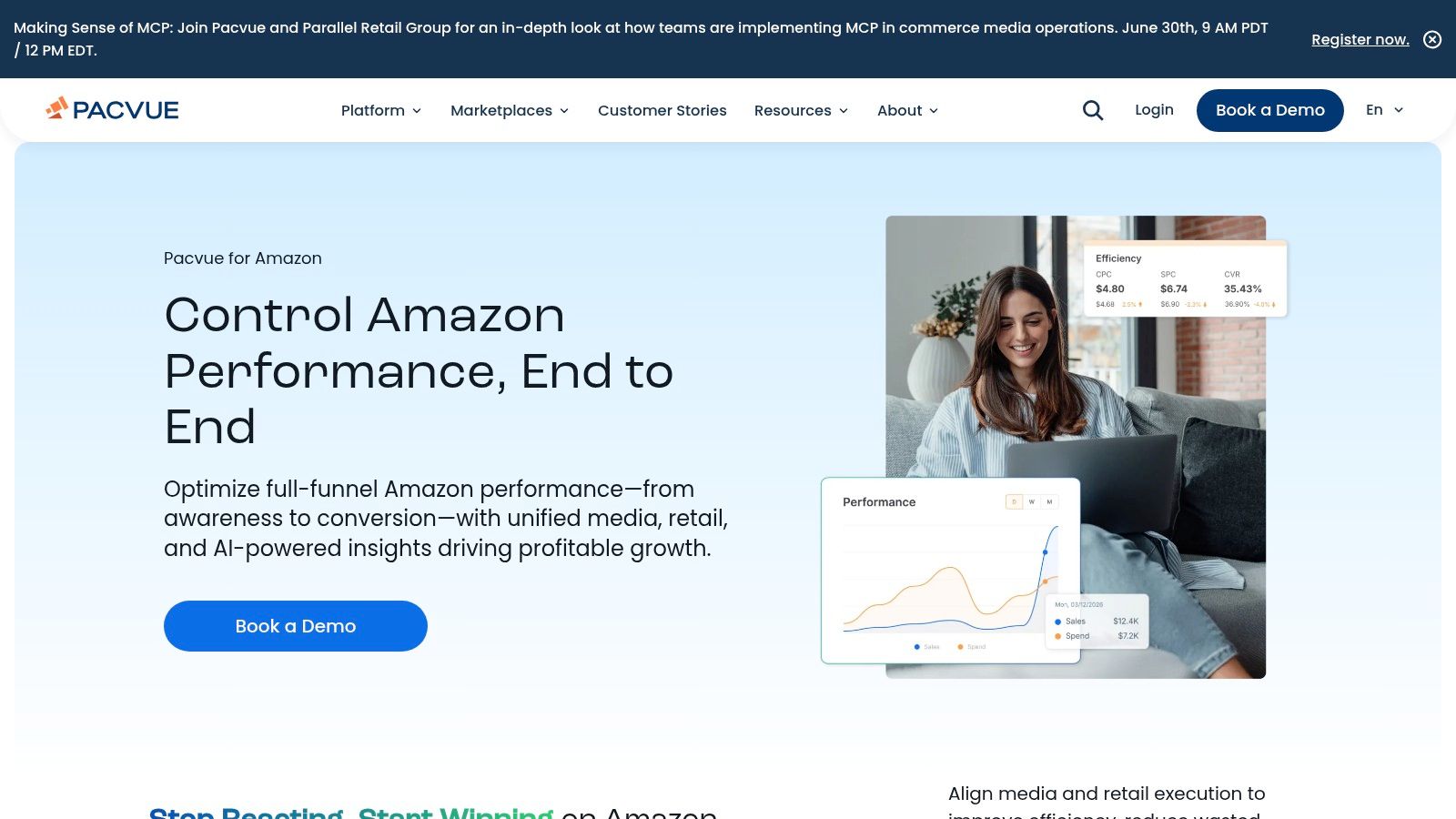
Pacvue is the enterprise option in this lineup. It combines ad data with retail execution signals like inventory, pricing, and Buy Box health across Amazon and other retailers. For large brands and agencies, that's a key appeal. You can connect media performance to retail conditions instead of treating them as separate workstreams.
That approach matches how discovery works now. Amazon's A9 algorithm prioritizes conversion rate, low return rates, strong seller performance, and sales history, and Channelsight's Amazon listing optimization guide also notes that primary keywords belong in titles and bullets while secondary keywords belong in backend search terms within the 250-byte limit. In other words, ranking isn't just about traffic. It's about whether the retail offer holds up after the click.
Best fit
Pacvue makes sense when you manage multiple brands, regions, or retailers and need governance across all of them.
Best for: Enterprise teams that need one operating layer across ads and retail readiness.
Watch for: Custom pricing and sales-led buying cycles.
Reality check: Smaller sellers usually won't use enough of the platform to justify the complexity.
Top 7 Amazon Selling Tools Comparison
Tool | Implementation complexity | Resource requirements | Expected outcomes | Ideal use cases | Key advantages |
|---|---|---|---|---|---|
Cosmy | Low–Medium, quick ASIN/URL input, demo-led onboarding | Subscription / demo; minimal internal copywriters for review; access to ASIN data | Rapid, publish-ready Amazon listings; improved CoSMo/Alexa visibility scores | Agencies and catalog teams needing fast, repeatable listing optimizations | Amazon-specific CoSMo & Alexa scoring, publish-ready copy at scale |
Amazon Seller Central (incl. FBA & Ads) | Medium, required operational setup and ongoing management | Operational staff, inventory, FBA fees, ad budgets | Source-of-truth catalog/fulfillment control, direct ad serving and Prime eligibility | All sellers as the mandatory platform for listing, fulfillment and ads | Direct channel access, native fulfillment (FBA) and ad inventory |
Helium 10 | Medium, straightforward SaaS onboarding with multiple modules | Subscription tiers, analyst time for research & listings | End-to-end product research, listing QA and basic ad automation | In-house marketplace teams wanting an all‑in‑one toolset | Comprehensive research suite and clear public pricing |
Jungle Scout (Catalyst / Cobalt) | Low–Medium, easy start for SMBs, deeper setup for enterprise Cobalt | Subscription (tiered), team for analytics and PPC | Market/category benchmarking, product discovery, PPC basics to advanced | SMB sellers (Catalyst) and enterprise brands (Cobalt) | Strong market insights and clear SMB vs enterprise product segmentation |
Teikametrics | Medium–High, integration and bidding strategy setup required | Ad spend-driven pricing; optional managed services; data integrations | Automated bid/budget optimization focused on profitability; DSP/AMC expansion | Brands with significant ad spend seeking algorithmic bidding | Profit-focused automation and DSP/AMC integrations |
Perpetua | Medium–High, onboarding for goal-based campaigns and attribution | Platform fee + ad spend; team to define goals and manage reporting | Goal-driven campaign automation, incrementality and attribution insights | Brands/agencies that need unified retail-media campaign management | Mature automation, attribution and multi-marketplace coverage |
Pacvue | High, enterprise implementation, cross-system integrations | Custom pricing, API integrations, governance and operations teams | Unified ads, retail execution and measurement at scale across retailers | Large brands and agencies requiring centralized governance | Enterprise-grade analytics linking media performance to retail readiness |
Building Your Winning Amazon Stack
A winning Amazon stack starts with execution order, not tool count. Seller Central is the operating system. Research tools such as Helium 10 and Jungle Scout help teams size demand, spot competitive gaps, and pressure-test product ideas. Teikametrics and Perpetua help scale paid acquisition after the listing can convert. Pacvue fits later, once a larger brand needs tighter controls across media, retail operations, and reporting.
The bigger change is discoverability itself. Amazon search is no longer a keyword matching exercise. AI systems now evaluate whether a listing is easy to interpret, compare, and trust. Alexa for Shopping pulls from reviews, ratings, community Q&As, certified content partners, and shopping signals from beyond the PDP, and Amplifyy's analysis of Alexa for Shopping explains why weak review language or thin Q&A coverage can keep a product out of AI-generated comparisons.
That changes how I'd build the stack.
Start with listing clarity. A strong PDP does more than rank for terms. It answers use-case questions, removes ambiguity, and gives systems like CoSMo and Alexa enough structured, credible detail to place the product in the right comparisons. Research comes next, because keyword volume without context leads teams to chase traffic they cannot convert. Ad automation belongs after that. If the page is weak, automation just spends faster.
Teams still treating Amazon SEO as bullet stuffing and back-end search term management are playing an older version of the game. The better playbook is to combine operational control, market research, conversion-ready content, and paid optimization in that order.
If your team's still optimizing listings like it's a keyword spreadsheet exercise, Cosmy is a practical way to update the process for AI-driven marketplace search. It helps brand teams and agencies audit, score, and rewrite Amazon listings around Alexa for Shopping and CoSMo so products are easier to understand, easier to compare, and easier to discover.